1. Understanding Acetyl-L-Carnitine (ALCAR)
What is Acetyl-L-Carnitine?
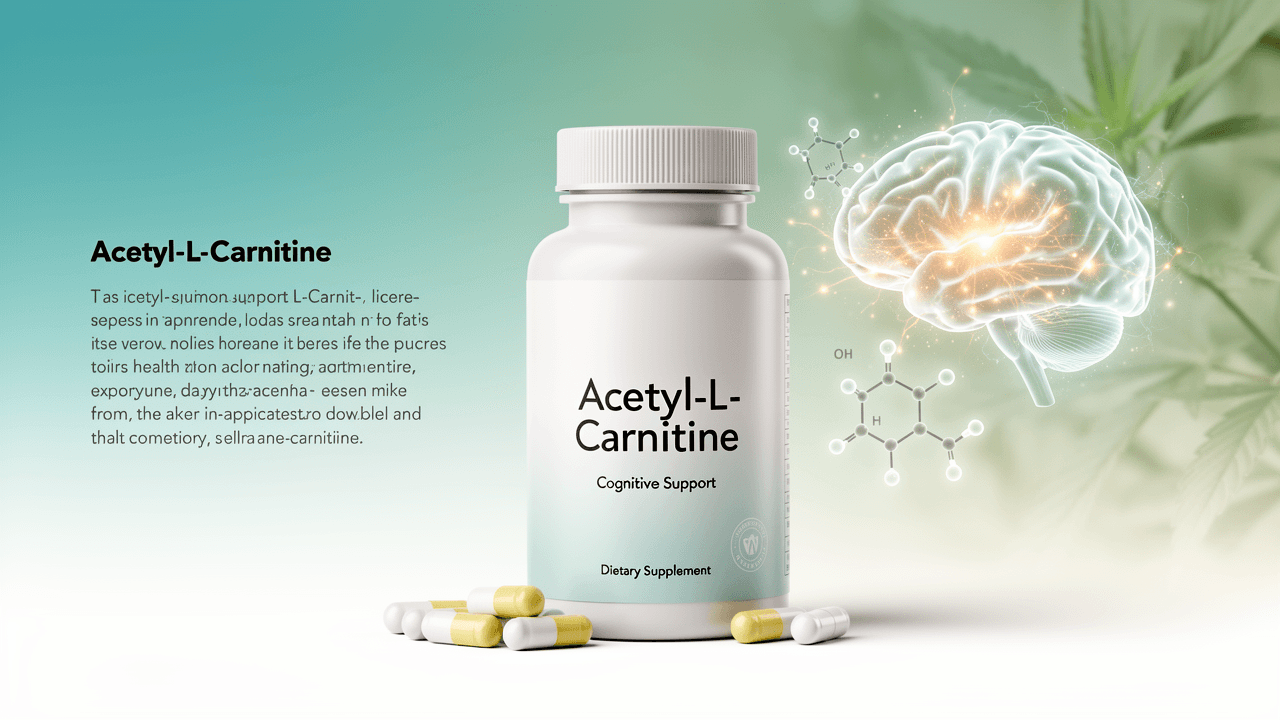
Acetyl-L-Carnitine (often abbreviated ALCAR) is an acetylated form of L-carnitine, a naturally occurring compound derived from the amino acids lysine and methionine. It is found in small amounts in foods (especially red meat and dairy) and is also synthesized in the liver and kidneys.
Unlike regular L-carnitine, ALCAR is more lipophilic and crosses the blood–brain barrier more efficiently, making it particularly relevant as a nootropic and neuroprotective supplement.
How ALCAR Works in the Body
ALCAR has several key mechanisms:
Mitochondrial Energy Metabolism
- Carnitine shuttles long-chain fatty acids into mitochondria for β-oxidation (fat burning) and energy (ATP) production.
- ALCAR can donate its acetyl group to form acetyl-CoA, a central substrate for the Krebs cycle, supporting cellular energy production.
Acetylcholine Synthesis
- The acetyl group from ALCAR can be used to synthesize acetylcholine, a major neurotransmitter involved in memory, learning, and attention.
- This is one reason ALCAR is often studied in cognitive decline and age-related memory issues.
Neuroprotection & Antioxidant Effects
- ALCAR may reduce oxidative stress and stabilize neuronal membranes.
- It appears to protect mitochondria from age-related dysfunction and reduce markers of lipid peroxidation in the brain in preclinical models.
Modulation of Neurotransmitters & Nerve Growth
- Animal and human data suggest ALCAR can influence dopamine and serotonin activity, potentially affecting mood.
- It may support nerve growth factor (NGF) and promote nerve regeneration, which is relevant for neuropathy.
Metabolic and Hormonal Effects
- ALCAR can influence insulin sensitivity, fatty acid metabolism, and in some studies has modest effects on testosterone and sperm quality in men with infertility.
2. Key Benefits of Acetyl-L-Carnitine
1. Cognitive Support and Age-Related Decline
- ALCAR is frequently studied in mild cognitive impairment (MCI) and Alzheimer’s disease.
- It may support memory, attention, and mental clarity, particularly in older adults or those with cognitive decline.
2. Mood and Depression (Especially in Older Adults)
- Several trials suggest ALCAR has antidepressant-like effects, especially in older adults and those with dysthymia or treatment-resistant depression.
- It may improve mood, fatigue, and overall quality of life.
3. Peripheral Neuropathy and Nerve Pain
- ALCAR has been studied in diabetic neuropathy, HIV-associated neuropathy, and chemotherapy-induced neuropathy.
- It can reduce pain scores and may support nerve regeneration.
4. Metabolic and Mitochondrial Support
- ALCAR may support mitochondrial function, fatty acid oxidation, and exercise tolerance.
- Some evidence suggests benefits for fatigue, especially in older adults or those with chronic fatigue states.
3. Research Findings on Acetyl-L-Carnitine
Below are representative human studies. Many trials are older but still informative; newer meta-analyses help consolidate the evidence.
3.1 Cognitive Function and Dementia
Alzheimer’s disease & mild cognitive impairment
Meta-analysis (Hudson et al., 2003)
- Design: Meta-analysis of 21 randomized controlled trials (RCTs).
- Participants: ~1,204 patients with mild cognitive impairment or mild-to-moderate Alzheimer’s disease.
- Dose & Duration: 1,500–3,000 mg/day ALCAR for 3–12 months.
- Findings: ALCAR produced small but significant improvements in cognitive performance (memory, attention, global function) compared with placebo, especially in younger elderly and those with less advanced disease.
RCT in mild cognitive impairment (Passeri et al., 1990s)
- Participants: 30+ elderly patients with MCI (exact sample sizes vary by report).
- Dose: 1,500 mg/day ALCAR.
- Duration: 3 months.
- Results: Improved memory and attention scores compared with placebo; better performance on standardized neuropsychological tests.
Cognitive aging and fatigue in healthy older adults
- Double-blind RCT (Malaguarnera et al., 2007)
- Participants: 66 centenarians (≥100 years old) with fatigue and cognitive impairment.
- Dose: 2,000 mg/day ALCAR vs placebo.
- Duration: 6 months.
- Findings: ALCAR group showed improvement in physical fatigue, mental fatigue, and cognitive function (MMSE scores) and increased muscle mass; placebo group did not.
Takeaway: Evidence supports modest cognitive benefits in older adults and those with MCI or early Alzheimer’s, especially with 1.5–3 g/day over several months. Effects in young, healthy adults are less consistently demonstrated and often smaller.
3.2 Depression and Mood
Meta-analysis of clinical trials
- Veronese et al., 2018 (American Journal of Psychiatry)
- Design: Systematic review and meta-analysis of 12 RCTs.
- Participants: 791 patients with depression (various subtypes; many older adults).
- Dose: Typically 1,000–3,000 mg/day ALCAR.
- Duration: 2–24 weeks.
- Findings: ALCAR was significantly more effective than placebo in reducing depressive symptoms and was comparable to conventional antidepressants in some trials, with fewer side effects. Benefits were most pronounced in older adults and those with dysthymia.
Dysthymia in the elderly
- Randomized trial (Bella et al., 1990)
- Participants: 60 elderly patients with dysthymic disorder.
- Dose: 3,000 mg/day ALCAR vs placebo.
- Duration: 2 months.
- Results: Significant improvement in depression rating scales and overall clinical impression vs placebo.
Takeaway: ALCAR shows consistent antidepressant effects in older adults and chronic low-grade depression at 1–3 g/day. It is not a substitute for standard therapy in severe depression but may be a useful adjunct under medical supervision.
3.3 Peripheral Neuropathy and Nerve Regeneration
Diabetic neuropathy
RCT (De Grandis & Minardi, 2002)
- Participants: 333 patients with diabetic neuropathy.
- Design: Multicenter, double-blind, placebo-controlled.
- Dose: 1,000 mg ALCAR intramuscularly daily for 10 days, then 2,000 mg/day orally for 1 year.
- Findings:
- Significant improvement in nerve conduction velocity.
- Reduction in neuropathic pain vs placebo.
- Some evidence of nerve fiber regeneration.
Additional trials have used 1–3 g/day ALCAR orally for 6–12 months, showing modest improvements in pain scores and nerve function.
Chemotherapy-induced neuropathy
- Results are mixed:
- Some open-label studies suggested improvement in neuropathic symptoms.
- However, concerns were raised in a few reports that ALCAR might worsen neuropathy associated with certain chemotherapies (e.g., paclitaxel) by supporting mitochondrial function in damaged neurons or even cancer cells.
- Evidence is not conclusive, and use in this context should be supervised by an oncologist.
Takeaway: ALCAR has relatively strong evidence for diabetic neuropathy at higher doses (2–3 g/day long-term). Use in chemotherapy-induced neuropathy is controversial and must be individualized.
3.4 Metabolic Health, Fatigue, and Exercise
Fatigue in elderly and chronic conditions
- Malaguarnera et al., 2007 (centenarian study above) showed improved physical and mental fatigue.
- Other small RCTs in hepatic encephalopathy, chronic fatigue, and frail elderly have noted improvements in fatigue, muscle function, and quality of life at 1–2 g/day.
Metabolic parameters and insulin sensitivity
- Studies in type 2 diabetes and metabolic syndrome using L-carnitine and ALCAR (often combined) have reported:
- Improved insulin sensitivity and glucose utilization.
- Reduced triglycerides and improved lipid profiles in some trials.
- Effects are modest and not universal; carnitine is not a primary treatment for diabetes.
Exercise performance
- ALCAR is less studied than L-carnitine for athletic performance.
- Some small trials suggest improved recovery, reduced muscle soreness, and enhanced mitochondrial function, but robust, consistent performance gains in trained athletes are not well established.
Takeaway: ALCAR may help fatigue and some metabolic parameters, particularly in older or metabolically compromised individuals, but it should be viewed as supportive, not a standalone therapy.
4. Best Sources & Dosage of Acetyl-L-Carnitine
4.1 Supplement Forms
Acetyl-L-Carnitine (ALCAR):
- Most common form for brain and nerve benefits.
- Usually available as capsules, tablets, or powder.
L-Carnitine Tartrate:
- More often used in sports supplements; better studied for exercise performance.
- Less efficient at crossing the blood–brain barrier than ALCAR.
Propionyl-L-Carnitine:
- Used more for cardiovascular and peripheral vascular disease.
For cognitive and nootropic purposes, ALCAR is the preferred form.
4.2 Evidence-Based Dosage Ranges
Below are typical oral doses used in human studies. Always start at the low end and adjust cautiously.
General Cognitive Support / Nootropic Use
- Typical dose: 500–1,500 mg/day.
- Common regimen:
- 500 mg once or twice daily (morning and early afternoon).
- Timing: With or without food; some people prefer with breakfast to avoid mild nausea.
Mild Cognitive Impairment / Age-Related Decline
- Studied dose: 1,500–3,000 mg/day (often divided 2–3 times daily).
- Duration in studies: 3–12 months.
- Should ideally be used under medical supervision, especially in older adults with multiple medications.
Depression (Adjunctive Use, Especially in Older Adults)
- Dose range in trials: 1,000–3,000 mg/day.
- Typical practical dose: 1,000–2,000 mg/day, divided into 2 doses (morning and early afternoon).
- Must be coordinated with a healthcare professional when combined with antidepressants.
Peripheral Neuropathy (e.g., Diabetic Neuropathy)
- Dose in large trials: 2,000–3,000 mg/day.
- Duration: 6–12 months or longer.
- Often divided into 2–3 doses per day.
- Use only under medical guidance, especially in diabetes.
Fatigue and General Mitochondrial Support
- Dose: 500–2,000 mg/day.
- Start low (500–1,000 mg) and titrate based on tolerance and response.
4.3 Practical Usage Tips
Start low:
- Begin with 500 mg once daily for 3–7 days.
- If well tolerated, increase to 500 mg twice daily if needed.
Avoid late evening dosing:
- ALCAR can be mildly stimulating; taking it late may disrupt sleep in some individuals.
With or without food:
- Many tolerate it well on an empty stomach, but if you experience nausea, take it with a small meal.
Stacking with other nootropics:
- Often combined with alpha-GPC or citicoline (for acetylcholine support), R-ALA (for mitochondrial support), or omega-3 fatty acids.
- Start with ALCAR alone first to assess individual response.
5. Safety, Side Effects, and Drug Interactions
5.1 General Safety Profile
ALCAR is generally considered well tolerated at doses up to 2–3 g/day in most clinical trials, including long-term use (up to 1–2 years) in older adults.
However, “generally safe” does not mean “risk-free.” Individual responses and medical conditions matter.
5.2 Common Side Effects
Most adverse effects are mild and often dose-related:
Gastrointestinal:
- Nausea, stomach upset, diarrhea, or abdominal cramps.
- Often improved by lowering the dose or taking with food.
Neurological / psychological:
- Restlessness, mild insomnia, or feeling “wired” (especially with high doses or late dosing).
- Headache in some users.
Other:
- Fishy body odor is more associated with high-dose L-carnitine, but can rarely occur with ALCAR.
5.3 Serious or Less Common Concerns
Seizure risk:
- There are case reports of increased seizure frequency in people with a history of seizures taking L-carnitine or ALCAR.
- Individuals with epilepsy or seizure disorders should use ALCAR only under neurologist supervision or avoid it.
Thyroid function:
- L-carnitine has been studied as a thyroid hormone antagonist in hyperthyroidism, suggesting it may modulate thyroid hormone entry into cells.
- People with hypothyroidism or on thyroid medication should discuss ALCAR with their endocrinologist; it could theoretically blunt thyroid hormone action in some tissues.
Cardiovascular risk and TMAO:
- High-dose carnitine (especially from red meat) can be metabolized by gut bacteria into trimethylamine (TMA), then converted in the liver to TMAO, which has been associated with cardiovascular risk in observational studies.
- Human data specifically linking supplemental ALCAR to increased cardiovascular events are limited and not conclusive.
- Those with known cardiovascular disease should be cautious and discuss use with their cardiologist.
Cancer and chemotherapy:
- Theoretical concern that enhancing mitochondrial function could influence cancer cell metabolism, but human evidence is lacking.
- In chemotherapy-induced neuropathy, data are mixed (see above); oncologist approval is essential.
5.4 Drug Interactions
Evidence on direct drug–ALCAR interactions is limited, but several theoretical or precautionary interactions are important:
Anticoagulants / Antiplatelet drugs (e.g., warfarin, clopidogrel):
- Limited data; some carnitine derivatives may affect platelet function.
- Monitor coagulation parameters more closely if combined; discuss with a physician.
Thyroid medications (levothyroxine, liothyronine):
- Because carnitine can interfere with thyroid hormone action in tissues, ALCAR may reduce the effectiveness of thyroid hormone therapy in some individuals.
- Use cautiously and monitor thyroid symptoms and labs.
Anticonvulsants (e.g., valproate, carbamazepine, levetiracetam):
- Due to seizure risk in predisposed individuals, combining ALCAR with anticonvulsants should be managed by a neurologist.
Chemotherapy agents (e.g., paclitaxel, cisplatin):
- Mixed findings regarding neuropathy; some clinicians avoid ALCAR during active chemotherapy unless specifically recommended.
Other stimulatory or nootropic agents (e.g., caffeine, modafinil, racetams):
- Potential for additive stimulation (e.g., insomnia, anxiety).
- Start with low doses, avoid late dosing, and monitor subjective effects.
Because many ALCAR users are on multiple medications (especially older adults), it is wise to review all prescriptions and supplements with a healthcare provider before starting.
6. Who Should and Shouldn’t Use Acetyl-L-Carnitine
6.1 Who May Benefit Most
Older adults with cognitive complaints or mild cognitive impairment
- Evidence supports modest improvements in memory, attention, and fatigue at 1.5–3 g/day.
- Should be coordinated with a physician, particularly if other medications are involved.
Individuals with depressive symptoms (especially older adults)
- ALCAR may be a useful adjunct to standard treatment for dysthymia or mild-to-moderate depression under medical supervision.
People with diabetic neuropathy
- Higher doses (2–3 g/day) may reduce neuropathic pain and support nerve function.
- Must be overseen by a clinician managing the patient’s diabetes and neuropathy.
Individuals seeking mitochondrial support and fatigue reduction
- Especially in age-related fatigue, chronic illness, or recovery from catabolic states, ALCAR may support energy metabolism.
Select nootropic users
- Those interested in mild cognitive enhancement, particularly mental energy and focus, may benefit from 500–1,500 mg/day.
- Effects are usually subtle; expectations should be realistic.
6.2 Who Should Use Caution or Avoid ALCAR
People with a history of seizures or epilepsy
- Use only under neurologist supervision, if at all, due to case reports of increased seizure frequency.
Individuals with uncontrolled thyroid disease
- Hyperthyroidism: ALCAR has been studied as adjunctive therapy but must be supervised by an endocrinologist.
- Hypothyroidism: Possible interference with thyroid hormone action; use cautiously or avoid without medical input.
Patients undergoing chemotherapy
- Especially with agents associated with neuropathy (e.g., paclitaxel, cisplatin).
- Use only if specifically recommended by the oncology team.
Pregnant or breastfeeding women
- Human safety data are insufficient.
- Avoid unless clearly indicated and approved by an obstetric provider.
Children and adolescents
- Limited research on chronic ALCAR use in healthy children.
- Use only under pediatric supervision for specific indications.
Individuals with significant cardiovascular disease
- Due to theoretical TMAO-related risk and complex medication regimens, carnitine supplements should be discussed with a cardiologist.
6.3 General Precautions
Medical supervision:
- Recommended for anyone with chronic illnesses (diabetes, heart disease, neurological disorders, psychiatric conditions) or on multiple medications.
Monitoring:
- Track changes in mood, sleep, cognition, and any new symptoms after starting ALCAR.
- For higher doses (>1,500 mg/day) or long-term use, periodic review with a clinician is advisable.
Not a replacement for treatment:
- ALCAR is a supportive supplement, not a substitute for evidence-based medical care for depression, dementia, neuropathy, or metabolic disease.
7. Summary
Acetyl-L-Carnitine (ALCAR) is a well-studied carnitine derivative that:
- Supports mitochondrial energy production and fatty acid metabolism.
- Crosses the blood–brain barrier and contributes to acetylcholine synthesis, making it relevant for cognitive function.
- Shows evidence for modest cognitive benefits in older adults and those with mild cognitive impairment or early Alzheimer’s disease.
- Has antidepressant-like effects in older adults and may reduce neuropathic pain in diabetic neuropathy at higher doses.
- Is generally safe at 500–2,000 mg/day, with higher doses (up to 3,000 mg/day) used in specific clinical contexts under supervision.
However, ALCAR is not risk-free. It may not be appropriate for individuals with seizure disorders, uncontrolled thyroid disease, active chemotherapy, pregnancy, or complex cardiovascular disease without medical guidance. Side effects are usually mild and involve gastrointestinal upset or insomnia, but more serious concerns exist in susceptible populations.
For healthy adults seeking a nootropic, starting with 500–1,000 mg/day in the morning, monitoring response, and avoiding late dosing is a reasonable approach. For therapeutic uses (cognitive decline, depression, neuropathy), collaboration with a healthcare professional is essential to ensure safety, appropriate dosing, and integration with standard treatments.